DTF vs DTG vs Screen Printing: Which Is Right for Print-on-Demand?
Samet KapucuoğluOctober 6, 20262 min read
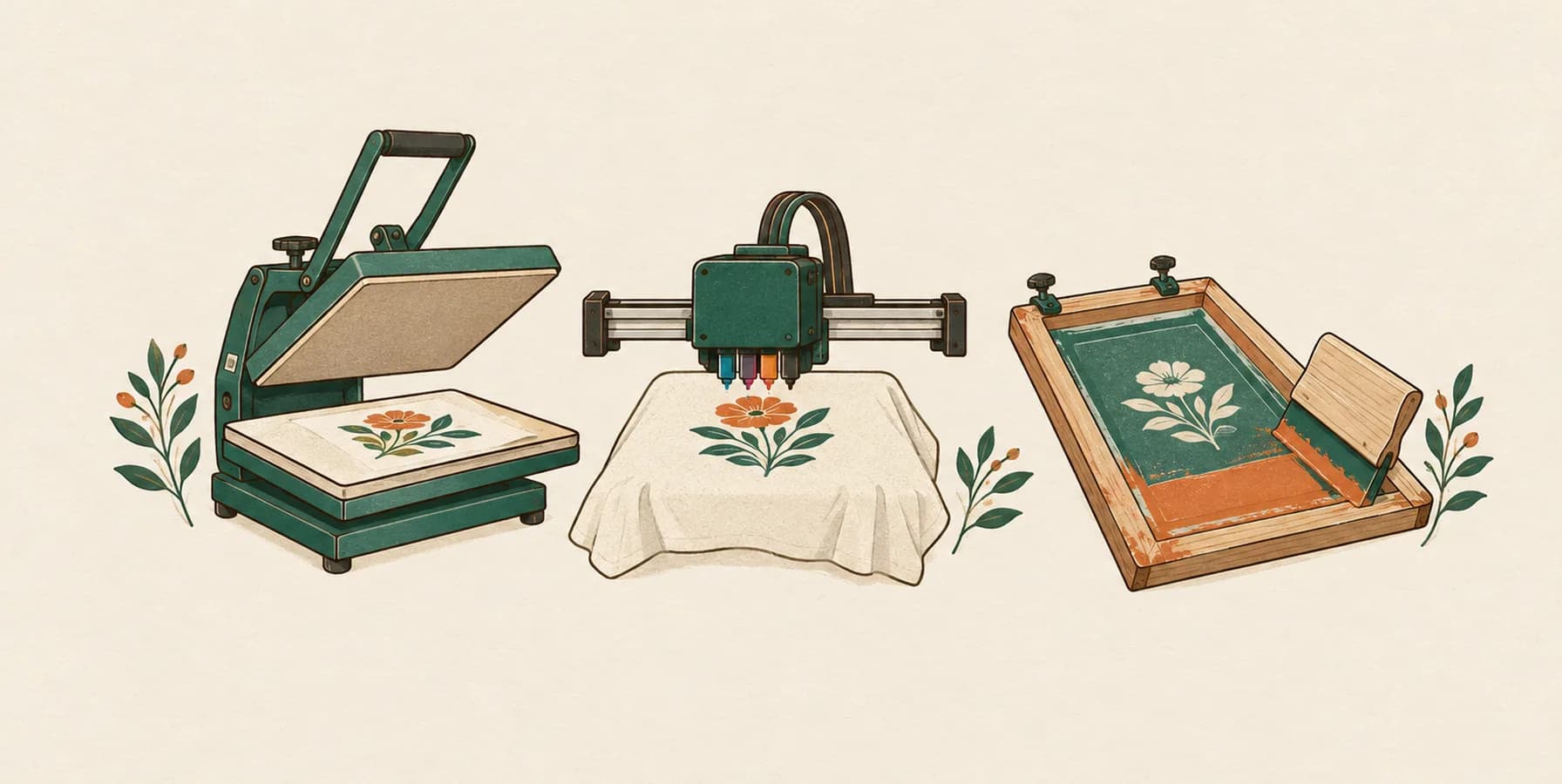
Three ways to put a design on a shirt
Most print-on-demand apparel is printed with one of three methods. Each has strengths, and the right choice depends on the garment, the design and how many of each item you sell.
DTG: direct-to-garment
How it works
A DTG printer works like an inkjet printer for fabric: it sprays water-based ink directly into the garment. Dark garments are first treated with a pretreatment solution so a white ink layer can sit under the colors.
Good at
- Soft feel, because the ink sits in the fabric
- Detailed, multicolor artwork and gradients
- Single items with no setup cost
Watch out for
- Works best on 100% cotton or high-cotton blends
- Results depend on correct pretreatment and curing, especially on dark garments
DTF: direct-to-film
How it works
The design is printed onto a special film, covered with an adhesive powder and cured. The transfer is then heat-pressed onto the garment. Many designs can be laid out together on one sheet, called a gang sheet, and cut apart before pressing.
Good at
- Works on cotton, polyester and many blends
- Bright colors on both light and dark garments
- Efficient for print-on-demand, since many different designs can share one gang sheet
Watch out for
- The print sits on top of the fabric, so large solid areas feel slightly heavier than DTG
- Soft, semi-transparent effects need care in the file, because printed areas are backed with white
Screen printing
How it works
A stencil, or screen, is made for each color in the design. Ink is pushed through each screen onto the garment, one color at a time.
Good at
- Very durable, vivid prints
- Low cost per item on larger runs of the same design
Watch out for
- Setup cost for every color and every design
- Not practical for one-off orders or photo-like gradients
Which one for your shop?
- Selling many designs, one at a time, on mixed fabrics: DTF is a practical default.
- Soft-feel prints on cotton, with detailed artwork: DTG can be a great fit.
- A proven design selling in volume: screen printing may lower your cost per item.
Prepare the file for the method
Whatever the method, start from a high-resolution PNG with a transparent background. Our guide to print files, resolution and DPI covers the details.
How it works in Podinfly
Orders you send to production go to a print supplier in Podinfly's network, who approves the order, prints it (laying DTF designs out on gang sheets), ships it with a label and adds the tracking number back to your order.